Trtl Pillow Review UK 2026
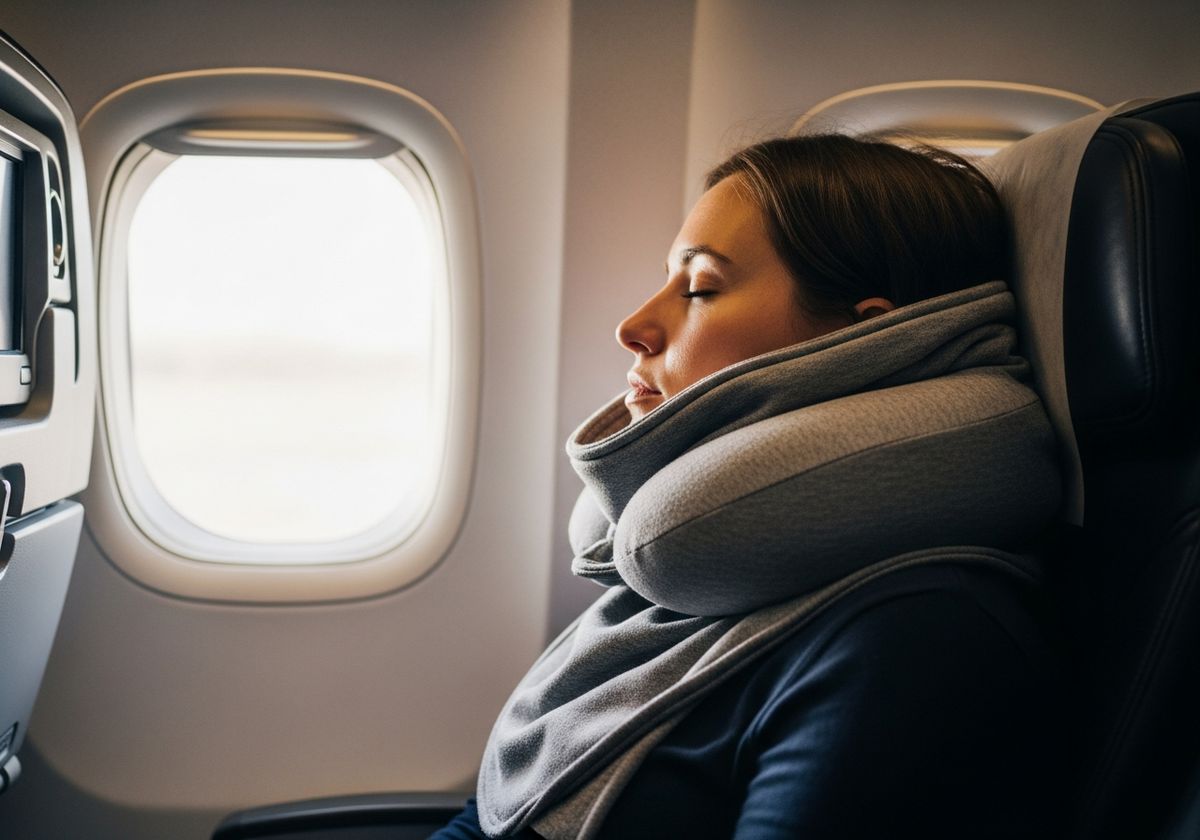
A genuinely different travel pillow that works for most people and looks strange to everyone else. We recommend it.
What we liked
- Actually prevents head-drop
- Packs almost completely flat
- Washable fabric outer
- Plus version has adjustable spine
- Good for sideways and forward sleepers
What we didn't
- Looks unusual, not a minor point
- Takes 1 to 2 flights to use correctly
- Not ideal for bolt-upright sleepers
- Spine slightly less compressible in Plus version
- Warmth on the neck on long flights
Best for: Side and forward sleepers who've given up on U-shaped pillows and are ready to try something that looks a bit odd in exchange for actual results.
Not for: People who sleep bolt upright, or anyone not prepared to look slightly eccentric on a flight.
The short version
The Trtl Pillow works. It works differently to how you probably expect it to, and it takes a flight or two before you're using it correctly, but once you understand that you're meant to be leaning sideways rather than sitting up straight, something clicks and it becomes genuinely useful. It's also the most packable serious travel pillow on the market. If you fly long-haul more than twice a year and you're a sideways sleeper, it's worth £45. If you're looking for something more conventional, the Cabeau Evolution S3 is a better shout.
What is the Trtl Pillow?
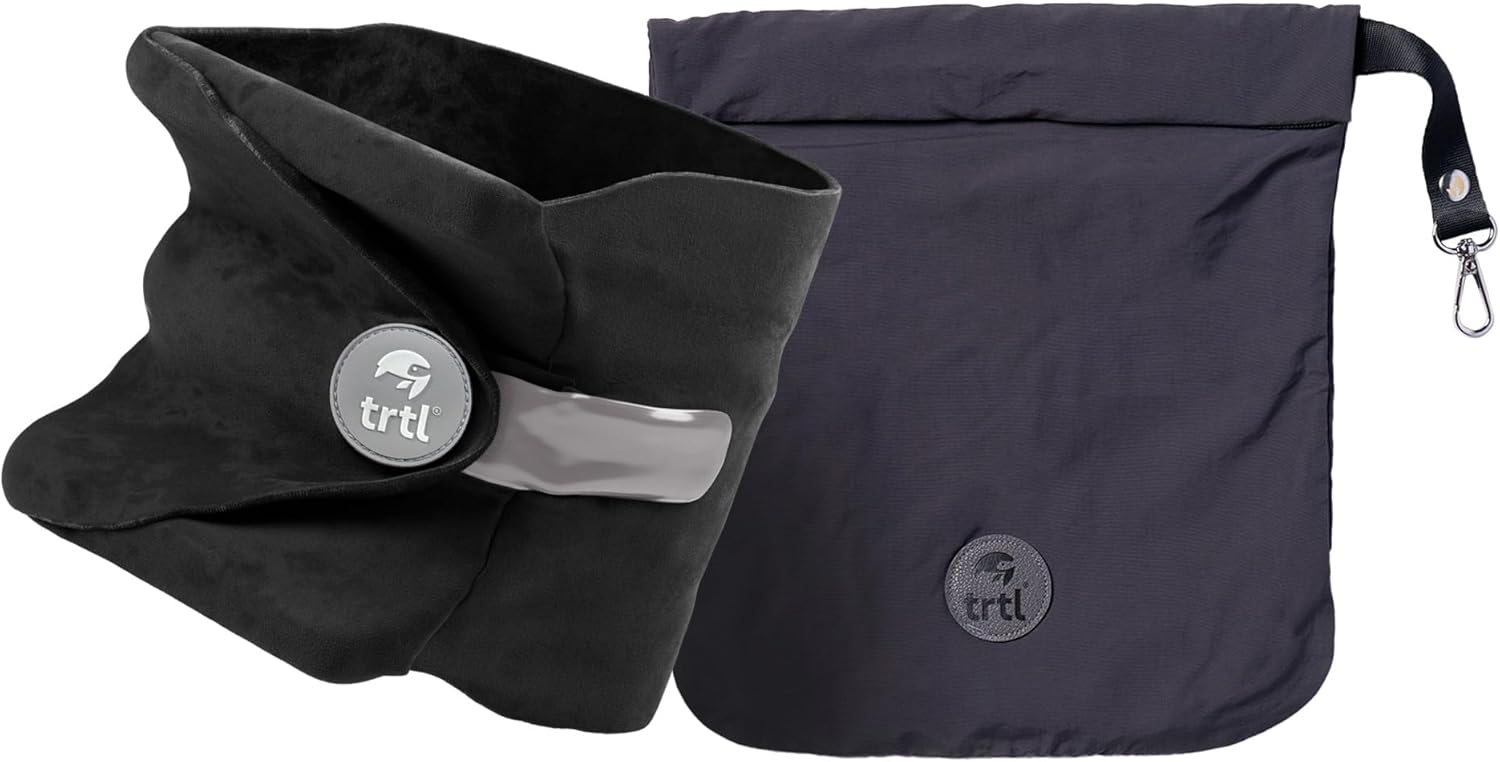
The Trtl Pillow is a scarf-shaped travel pillow with a rigid internal support spine. That's the simplest description, and it's essentially accurate. It wraps around your neck like a loose scarf and fastens at the front with a clasp. Inside the fleece-y outer is a plastic support structure, stiff enough to hold the weight of your head, slightly flexible enough to adjust to different neck shapes. The 'Plus' version has multiple spine positions, letting you adjust how far the support sits from your neck.
There's no U-shape. No inflating. No deflating. No valve that inevitably leaks on the overnight flight back. You pull it out of your bag, wrap it around your neck, clip it, and lean into it. That's it. It goes from packable to usable in about 20 seconds, which is a meaningful advantage when you're trying to get settled before take-off.
Trtl is a Scottish company, founded in Glasgow, still headquartered there. The pillow has been around since around 2015 and has built a loyal and vocally divided community of travellers around it. You either swear by it or you find the whole concept baffling. Both reactions are, as we discovered, completely understandable.
Design and build
The outer material is a soft, fleece-adjacent fabric, comfortable against skin, warm (which is a mild issue on long flights in humid cabins, more on that later), and machine-hand-washable. The inner support spine is rigid plastic with a slight flex to it. The Plus version's spine has four adjustable settings, which lets you customise how close the support sits to your neck and how far it extends upward.
The clasp at the front is simple and secure. It doesn't come undone mid-flight, which is the main thing you need from it. There are a few colour options, nothing wild, mostly muted tones that don't look embarrassing when you're walking through an airport.
The build quality looks solid on paper: a rigid plastic spine and a fleece outer built to handle regular use. The washable outer is a genuine plus: most travel pillows accumulate neck-smell in an alarming way, and being able to hand-wash this one every few weeks makes a real difference to long-term use.
The only build note: the Plus version's spine makes it slightly less compressible than the original. If you're packing into a very full carry-on, the original might be more practical. The Plus is marginally bulkier but the adjustability is worth it if you have the space.
Comfort, does it actually work?
This is the question. And the honest answer is: yes, but not in the way you'll expect the first time.
The Trtl doesn't hold your head upright. It holds your head sideways. This is a critical distinction, and it's why first-time users often think it doesn't work, they're sitting bolt upright expecting the pillow to keep their head from dropping forward, and of course it doesn't, because that's not what it does. The spine provides lateral support: it goes beside your neck, and you lean into it. Your head rests against the spine, the spine takes the weight, your neck doesn't strain. That's the mechanism.
Once you understand this, and start using it correctly, leaning sideways rather than fighting to stay upright, it works remarkably well. The head-drop problem (the sudden lurch forward that jolts you awake) essentially disappears, because you're resting with your head already supported in a lateral position. For side sleepers, this is as close to a real sleep position as you can get in an economy seat.
The caveat: bolt-upright sleepers won't benefit much. If your natural sleep position is straight up with your head perfectly balanced, the Trtl gives you nothing, you'd need something that prevents forward head-drop, which is a different problem. Similarly, if you share a armrest and want to lean toward the window, the pillow positions the support on whichever side you wrap it, so think about where you're sitting before you board.
On warmth: the fleece outer is noticeably warm around the neck on longer flights. This was a minor annoyance in warmer cabins and genuinely uncomfortable on a particularly stuffy A380 at hour nine. Not a dealbreaker, you can wear it loosely, but worth knowing if you run warm.
The Trtl in use on a long-haul flight, note the sideways lean rather than upright position
Packability
This is where the Trtl has a clear and uncontested advantage over almost every competitor. It folds flat. Not "compact" flat, actually, genuinely flat, roughly the footprint of a small book and perhaps an inch thick. It clips to the outside of a bag or tucks inside without taking up any meaningful space.
Compare this to a memory-foam horseshoe pillow, even a compressed one, and the difference is significant if you're carry-on-only. The Trtl takes up about a fifth of the space of a standard U-shaped pillow, and about half the space of the Cabeau in its compression sack. For anyone who travels with a single carry-on and is making the usual compromises, this matters.
The Plus version is slightly less compressible than the original due to the multi-position spine, but still significantly more packable than most U-shaped alternatives. The original is genuinely borderline invisible in a bag. Both versions come with a built-in clasp that lets them clip to a bag handle or strap, which is a small but useful detail for station and airport transit.
Trtl vs Cabeau vs Classic U-pillow
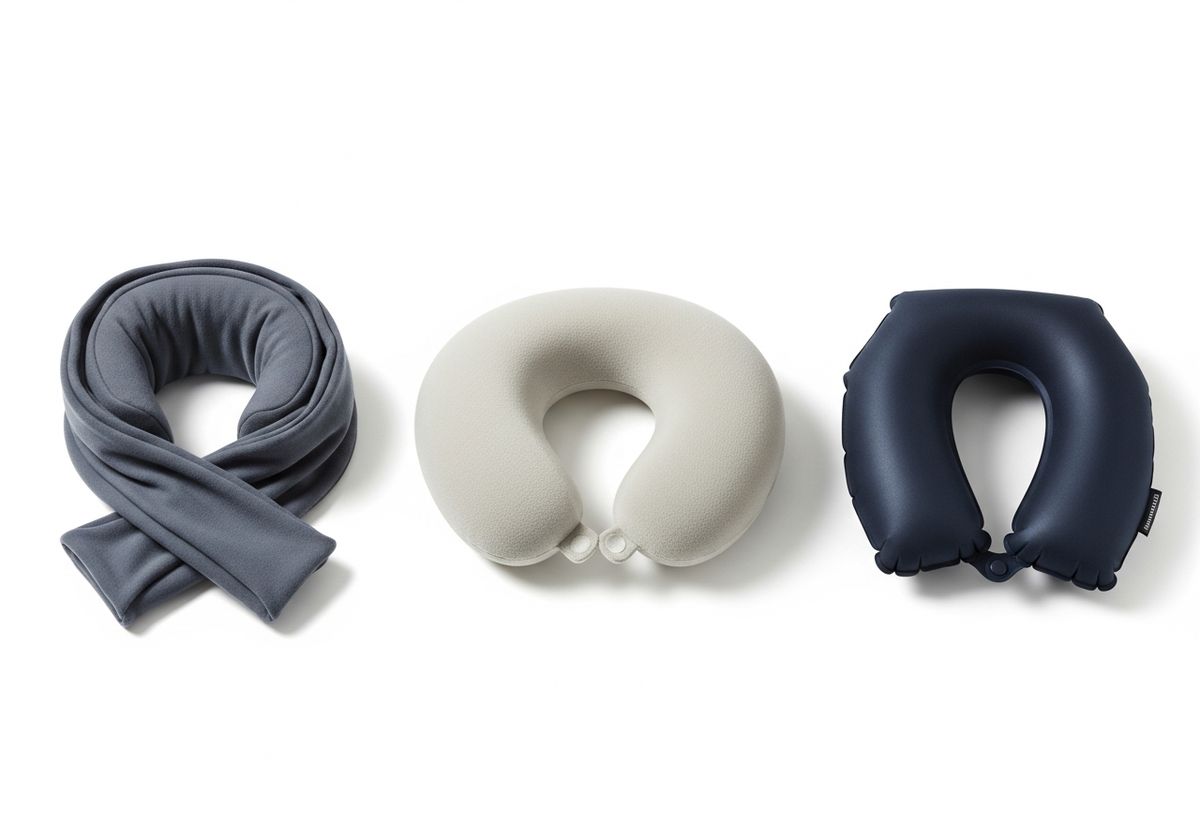
| Pillow | Price | Support type | Packability | Best for |
|---|---|---|---|---|
| Trtl Plus | ~£45 | Lateral spine (adjustable) | Excellent, folds flat | Side/forward sleepers, carry-on-only |
| Cabeau Evolution S3 | ~£55 | Memory-foam horseshoe + front clip | Good, compresses to ~1/3 size | Traditional sleepers, first-timers |
| Classic U-pillow | ~£10 | Lateral neck support only | Poor, bulky even compressed | Short flights, budget travel |
Where to buy
The Trtl Pillow Plus is available from Amazon UK (usually the best price and fastest delivery) and direct from Trtl's own site, where you'll occasionally find bundles or colourways not stocked on Amazon. Check both before buying, prices can differ by a few pounds either way.
Prices vary. Always check the current price before buying. Amazon Associates tag: gopacuk-21.
Questions we get asked
Is the Trtl Pillow worth it?
Yes, for most people. If you fly long-haul more than twice a year and you're a sideways or forward sleeper, the Trtl Pillow Plus will meaningfully improve your in-flight sleep. The price (around £45) is reasonable for something that actually works. The key is understanding how to use it before you board: you're not sitting straight up with it, you're leaning sideways into the support. One flight to learn the technique, several years of better sleep in return.
How does it compare to a standard U-shaped travel pillow?
Significantly better for most people, in our experience. A U-shaped pillow supports the sides of your neck but does nothing about forward head-drop, which is how most people's heads fall when they drift off seated. The Trtl's spine takes the weight of your head in a leaned-sideways position, which is how most people naturally sleep on planes. The trade-off is that it looks different and takes a flight or two to get used to. The standard U-pillow is cheaper and more familiar; the Trtl is more effective.
Can you wash the Trtl Pillow?
Yes. Remove the internal support spine first, it slides out from the fabric outer, then hand-wash the outer in cool water and air dry. Give it a few hours to dry fully before packing. The fabric holds up well to washing; our test pillow has been washed several times and shows no wear. The spine itself doesn't need washing and shouldn't be submerged. Trtl recommends hand-wash only; we'd agree, machine-washing would risk damaging the support structure over time.
Trtl vs Cabeau, which is better?
They solve slightly different problems. The Trtl uses a rigid spine to support your head in a leaned-sideways position, more effective at eliminating the head-drop, but requires you to lean into it and takes getting used to. The Cabeau Evolution S3 is a memory-foam horseshoe that clips at the front to stay put, more traditional, more intuitive, slightly better for people who sleep more upright. The Trtl packs significantly flatter. The Cabeau is easier to use correctly on the first flight. If you've never used either: start with the Cabeau. If you've tried U-shaped pillows and been disappointed: try the Trtl.
Bottom line
The Trtl Pillow Plus is recommended. It does what it claims, it packs better than anything comparable, and the build quality is solid. The learning curve is real but short, one flight, maybe two, before you're using it without thinking. At ~£45, if you fly more than twice a year on routes over five hours, it pays for itself in neck pain it hasn't caused.
The divisiveness around it is, frankly, a product of people using it wrong on the first flight and concluding it doesn't work. It works. You just need to lean into it, literally.
Buy Trtl Pillow Plus on Amazon →