








Tolkien Places to Visit in the UK: A Route Guide
Plenty of places across the UK say they inspired Middle-earth, and not all of them can prove it. If you plan trips around books, you want to know what you are really going to see. This guide takes five Tolkien places in route order, from his childhood in Birmingham, through his student years in Oxford, to a walking trail in Lancashire and the caves at Cheddar. For each one we say what the link is, how well it is sourced, and what to check before you travel.
We are a UK shop that makes art prints inspired by books. For anything that changes, such as opening dates and tickets, we point you to the official pages. Our longer guide to the places that inspired Middle-earth covers more places than we have room for here.
1. Sarehole Mill and Moseley Bog, Birmingham
The Tolkien link
This is where the story starts. Tolkien's childhood was split between the then very rural hamlet of Sarehole, with its mill, just south of Birmingham, and the city itself, according to the Tolkien Society's biographical sketch. Birmingham Museums, which runs the mill, says Tolkien grew up across the road and drew on the surrounding countryside when he created Middle-earth.
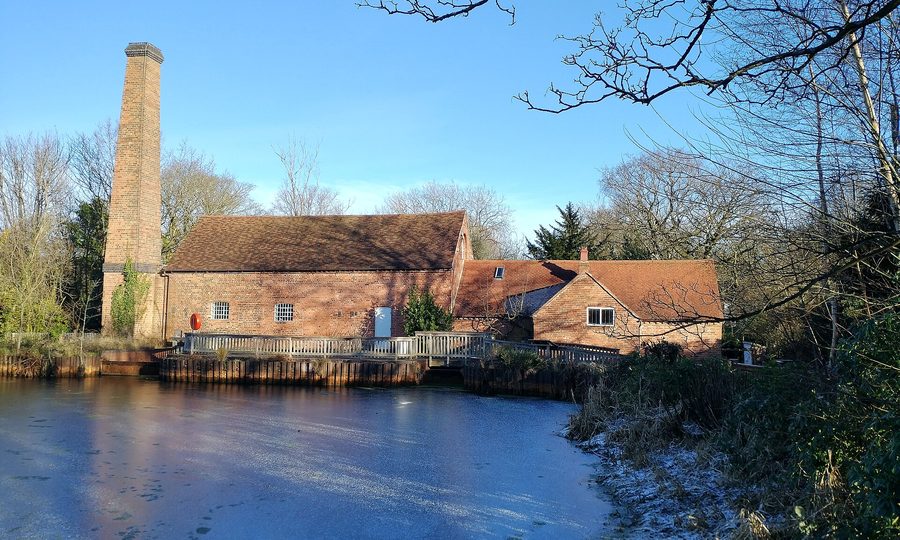
The strongest evidence is in his own words. In a 1966 interview, quoted on the museum's website, he said he took the idea of hobbits from "the village people and children." The museum adds that when he drew the mill in the Shire, he gave it a small tower, like Sarehole's.
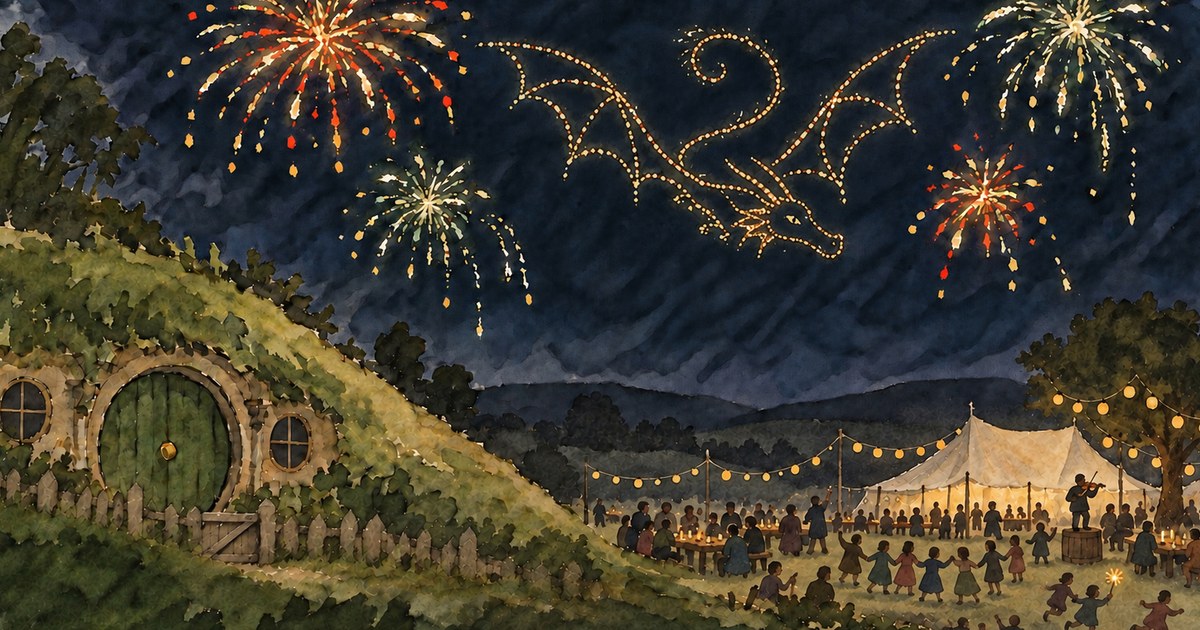
Our pen and watercolour print of Bag End and the birthday party shows a round green door set into a hill, with the village gathered in the field below. Its page says it is a print of a digital artwork in the style of a pen and watercolour painting, not an original.
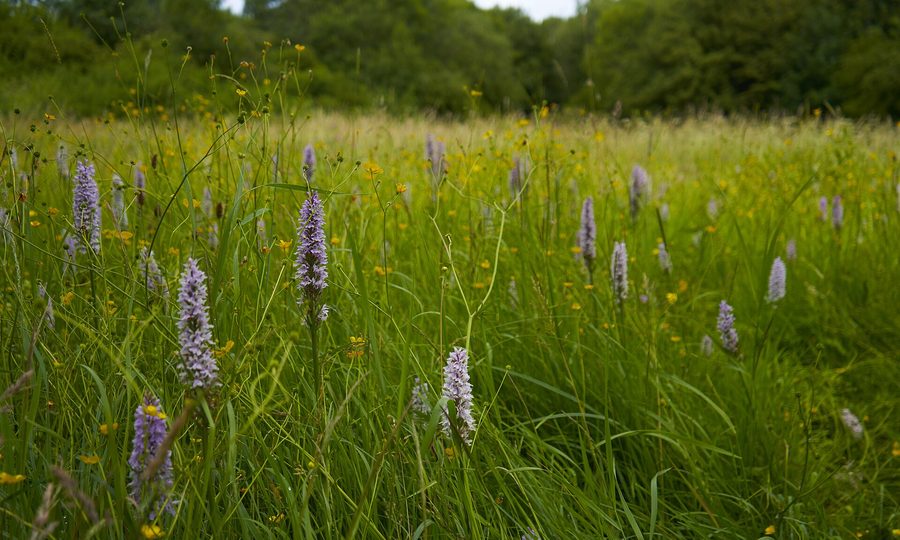
Moseley Bog is a softer link. The Wildlife Trust for Birmingham and the Black Country says the reserve was Tolkien's childhood playground and that he lived nearby. Birmingham City Council goes further and says he acknowledged it as inspiration for the ancient forests in his books. We did not find Tolkien's own words naming the bog, so we treat it as local tradition rather than a proven source.
Visiting notes
The mill is closed for the winter season, except for special events, and Birmingham Museums' visit page says it expects to return to its usual opening hours on 13 February 2027 (we read that on 23 November 2026). So for a trip before then, Moseley Bog is the part of this corner of Birmingham you can still visit. Tickets are booked through the museum's online shop, and the address is Cole Bank Road, Birmingham. Check the official page for days, times and prices.
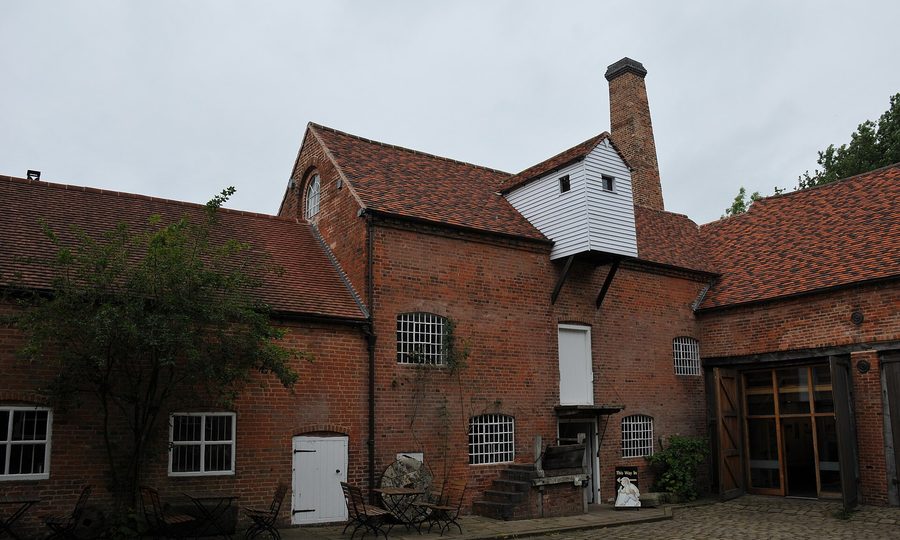
The bog is easier to fit into a winter trip. The Wildlife Trust says the reserve can be accessed at any hour throughout the year. There is a small car park at the Yardley Wood Road entrance and more parking at Windermere Road, but none on the road verge. Dogs are allowed, and many paths suit buggies and wheelchairs.
2. Tolkien's Oxford
Tolkien won a scholarship to Oxford and began studying there in October 1911. He came back in 1925 as a professor. Several stops here need careful checking, so read the notes before you go.
Exeter College
Exeter's own archive pages say Tolkien matriculated on 17 October 1911, aged 19, as an exhibitioner in Classics. He later changed to English Language and Literature, won the college's Skeat prize for English in 1914, and graduated in 1915 with first-class honours. The college archive holds records of his time there.
Seeing the college is less certain. Its visit page is written for prospective students and says to phone the Porters' Lodge to confirm the college is open and whether any areas are closed. Treat a look inside as something to check, not to assume.
The Eagle and Child
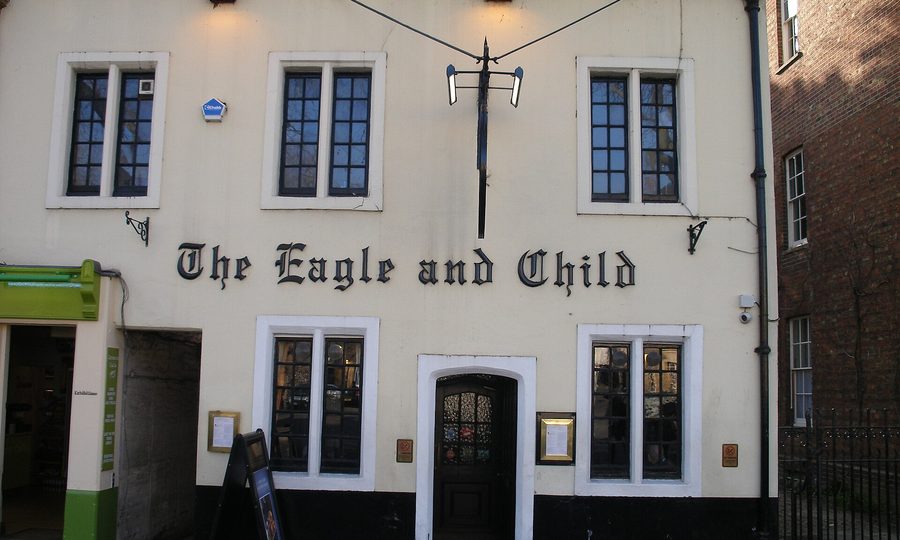
The pub on St Giles is where the Inklings, the writers' group that included Tolkien and C.S. Lewis, met for years, in the back room known as the Rabbit Room. It has been closed since March 2020, and we could not find any announced reopening date. Treat it as a landmark to see from the pavement on St Giles, not as somewhere to book a table.
The Weston Library and the Tolkien manuscripts
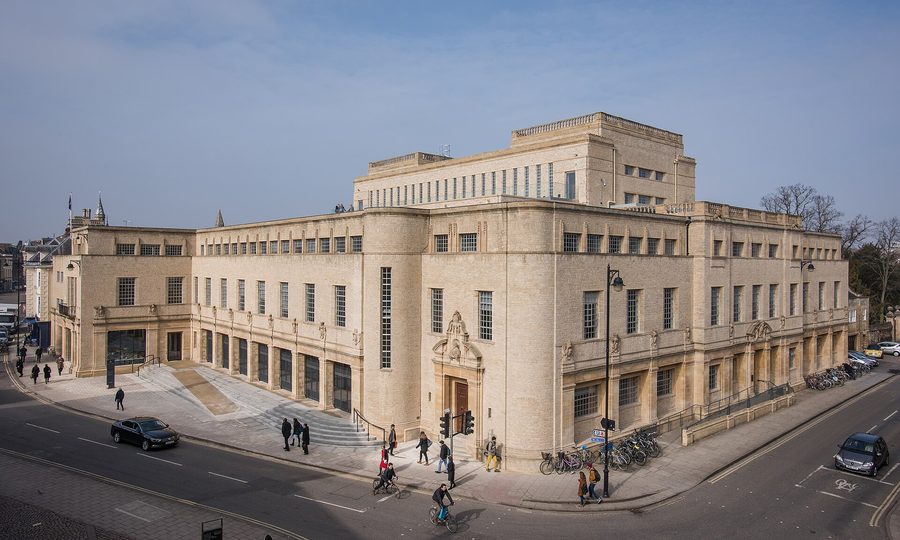
The Bodleian Libraries hold a large collection of original Tolkien manuscripts, which are open to scholars rather than on general show. The Bodleian's visit page says entry to the Weston Library is free and needs no ticket, and that the ground floor has exhibitions, a shop and a cafe. A major Tolkien exhibition there ended on 28 October 2018, and a later display that included his manuscripts ended on 1 February 2026. We found no Tolkien display currently listed, so check before making a special trip.
Wolvercote Cemetery
Tolkien and his wife Edith are buried together in a single grave in the Catholic section of Wolvercote Cemetery, in the northern suburbs of Oxford. The Tolkien Society says the grave is well signposted from the entrance. The headstone names Edith as Lúthien and Tolkien as Beren, after the pair at the centre of one of his best-known tales. The Society says that tale began when Edith danced for him in a grove of hemlock at Roos, in Yorkshire.
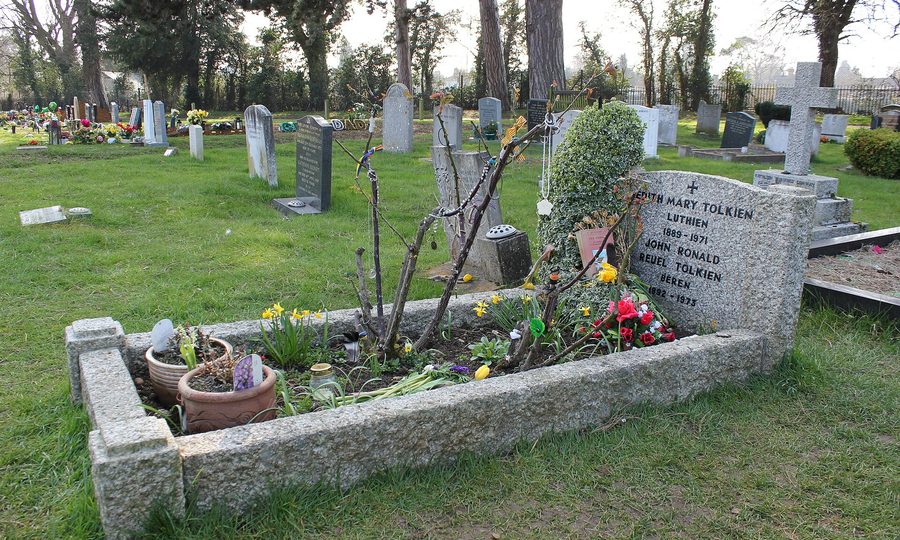
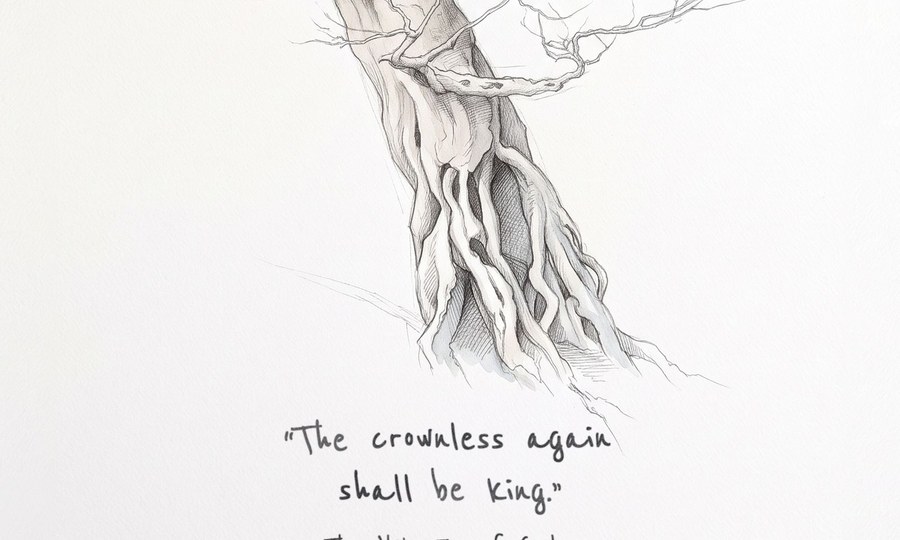
The main entrance is on Banbury Road, and a side entrance on Five Mile Drive is usually closed. We could not find a published visiting schedule, so check with Oxford City Council, which runs the city's public cemeteries. Visit quietly. If you would like a gentler note to take away, our White Tree of Gondor print shows a hollowed tree with a single pale blossom at the tip of a twig. In the story the tree is a sign of hope.
A poem from his student days
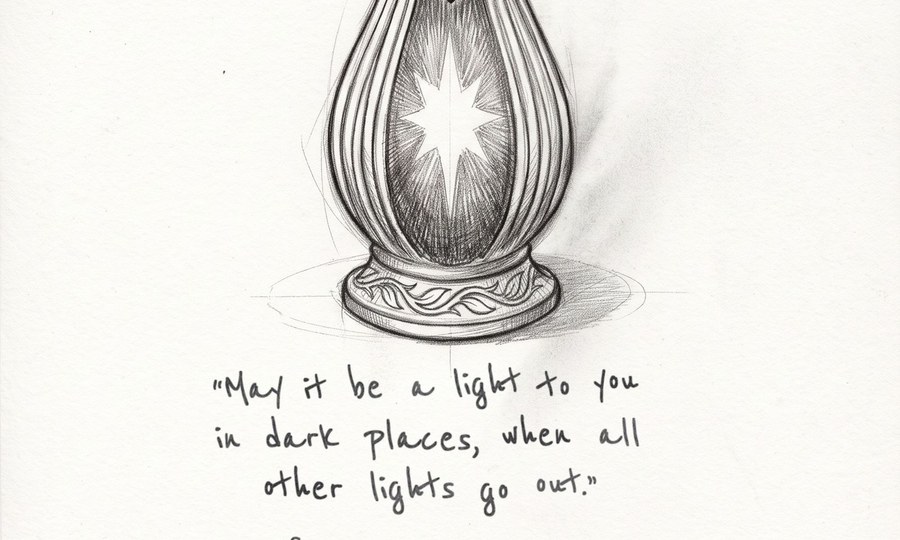
The Tolkien Society's timeline dates his first identifiable Middle-earth fragment, a poem about Earendel the evening star, to 24 September 1914, during his student years. Tolkien Gateway says he read it to an Oxford essay club that November. We cannot tie it to a building, so take it as a thread from his early life. Our pencil study, The Light of Earendil, shows a glass phial with a star left as bare white paper inside. Its page says the shape of the phial is our own design, because the book does not describe it.
3. The Tolkien Trail near Stonyhurst, Lancashire
The Tolkien link
This is the most debated stop, so it comes with a warning. The link on record runs through Tolkien's family. The Christian Heritage Centre at Stonyhurst says his son Michael taught at the college, and his son John trained for the priesthood there while the English College in Rome was closed during the Second World War. Tolkien visited often, and his name fills the visitors' book.
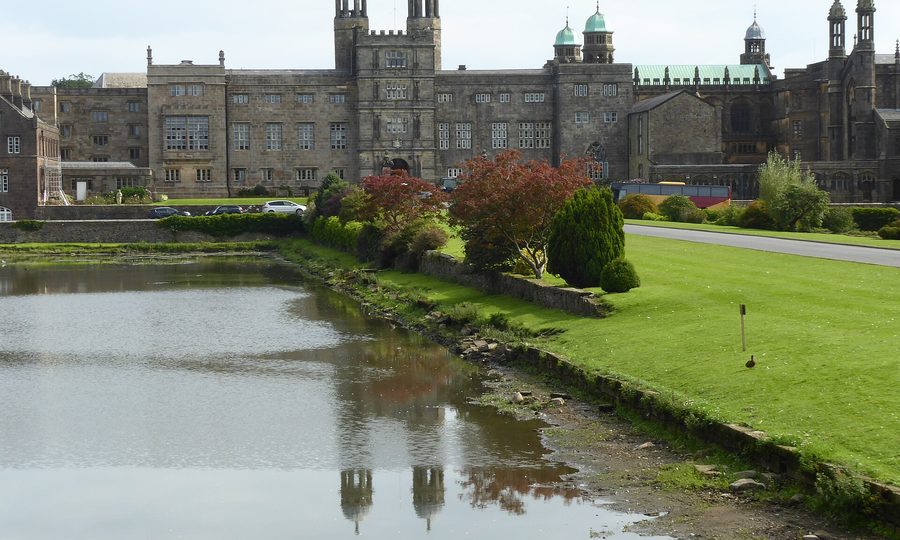
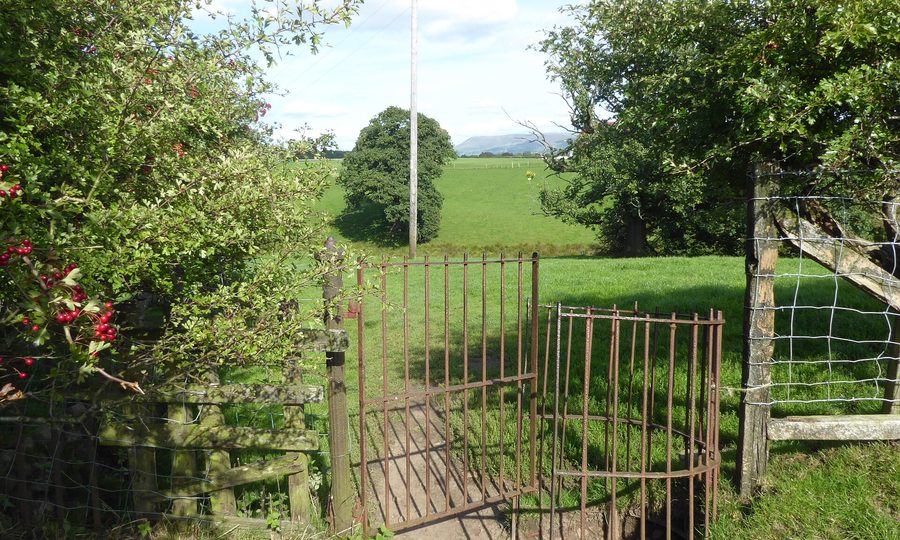
The landscape link is more speculative. Visit Lancashire says Tolkien spent time at Stonyhurst working on The Lord of the Rings in a classroom on the upper gallery, and points to local names that resemble names in the book: Shire Lane in Hurst Green, and the River Shirebourn, which echoes the name of the Shireburn family who built Stonyhurst. The same page admits that many parts of the UK claim to have inspired Middle-earth, and presents the connections as possibilities. We have not found Tolkien naming Hurst Green as a source, so enjoy it as a good walk with a literary story, not a proven location.
Visiting notes
The walk is 5.5 miles and takes about two and a half hours, according to Visit Lancashire, whose pages credit Marketing Lancashire and Lancashire County Council. It starts and ends at the Shireburn Arms in Hurst Green, where you can collect the route map, or download it as a PDF or GPX file. The Christian Heritage Centre describes the trail as starting at Stonyhurst, so sources differ on the start. Use the official map and check the current access arrangements. The Shireburn Arms is dog friendly.
4. Cheddar Gorge and Caves, Somerset
The Tolkien link
Tolkien is said to have based the glittering caves of his book on the caves in Cheddar Gorge. The claim comes from a letter of 4 February 1971 to P. Rorke (Letter 321), as summarised by the Tolkien Gateway summary of the letter; we could not read the letter itself, so treat the link as well reported rather than confirmed. The summary says he had revisited the caves in 1940, but that his main memory came from a visit on his honeymoon. The caves in question are the ones Gimli describes in The Two Towers, behind Helm's Deep.
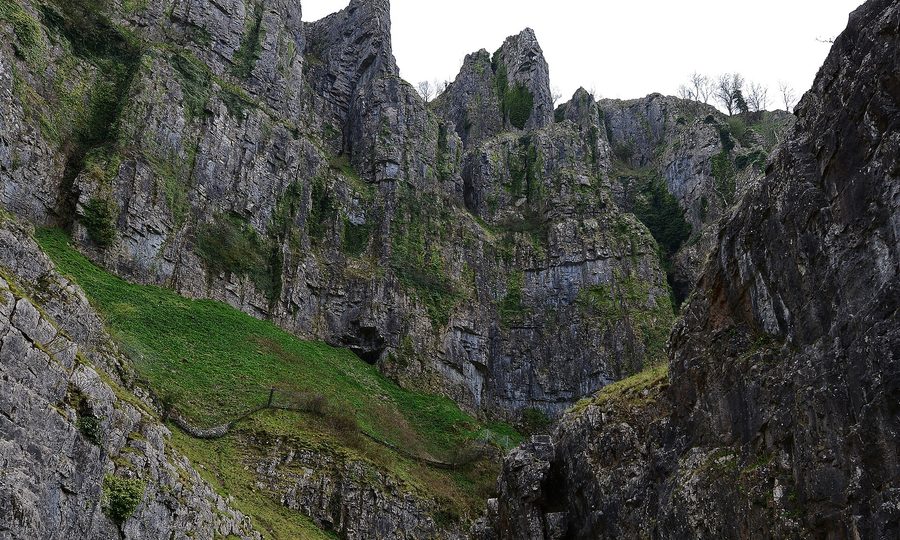
How closely they match is a matter of opinion. The Tolkien scholar Dr Dimitra Fimi visited Gough's Cave and wrote that Gimli's speech follows the visitor's path from small marvels to grander chambers. She found Aladdin's Cave, a small grotto, a striking match, and the deeper chambers a weaker one. The official Cheddar Gorge site does not mention Tolkien, so the link rests on that reported letter and on scholars, not on the attraction itself.
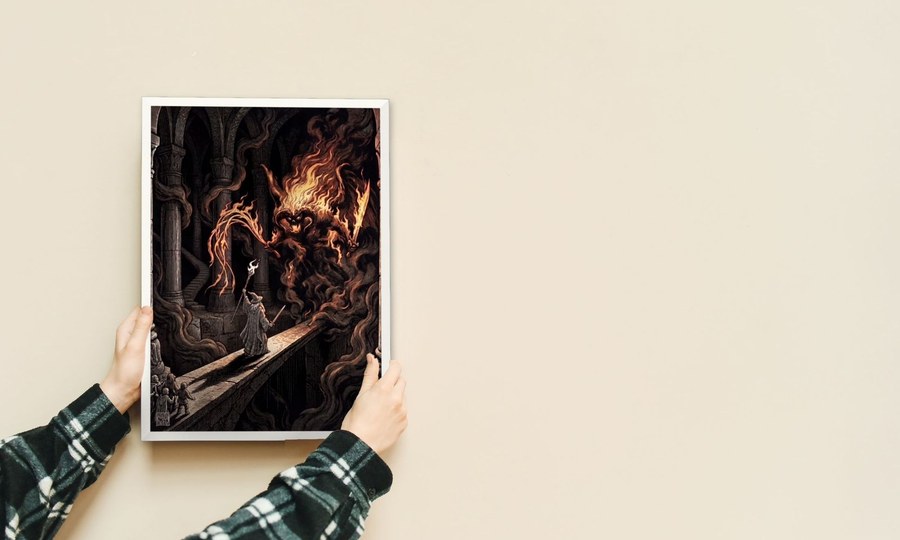
If caves make you think of Moria instead, note that Tolkien's letter is about the glittering caves, not the Mines of Moria. Still, that underground dark is the mood of our wood-engraving style print of Gandalf and the Balrog on the bridge, which its page sums up as one small figure and one very large dark.
Visiting notes
Cheddar Gorge & Caves is in the Mendip Hills at Cheddar, Somerset. Its official site says opening times change with the seasons and points to a calendar on its opening times page. It showed as closed on the day we read it, a Monday, so check the calendar for your day. Tickets are booked online, and the site advises arriving early in school and bank holidays. It also lists a Christmas event from 21 November to 24 December 2026.
Plan a Tolkien weekend
We have not invented journey times, so check the train times and road routes before you book.
- Birmingham then Oxford. This follows his life in order. Spend a day in south Birmingham on Moseley Bog and the Sarehole area, remembering the mill is closed until 13 February 2027. Make Oxford your second day, for Exeter College, the Weston Library, the outside of the Eagle and Child and Wolvercote Cemetery. Check the train times between the two cities.
- Lancashire. Give the Tolkien Trail a day of its own. If you want to pair it with the Lake District, we found no verified Tolkien link there, so treat that part as scenery.
- Somerset. Cheddar suits a short winter break, with the caves and the seasonal Christmas event. Check the opening calendar and book ahead.
Before you go
If you are shopping for a Tolkien fan, our Lord of the Rings fan hub has a timeline and a places map, and our Lord of the Rings gift ideas are sorted by budget. Our prints are independent art prints inspired by the books, not official merchandise. For Christmas, framed prints are made to order and need ordering by 12 December. That is the date our shop banner showed on 23 November 2026, so check the banner for the current date.
FAQ
Where did Tolkien grow up in Birmingham?
His childhood was split between the then very rural hamlet of Sarehole, with its mill, just south of Birmingham, and the city itself, according to the Tolkien Society's biographical sketch. Birmingham Museums, which runs the mill, says he grew up across the road and drew on the surrounding countryside.
Can you visit Sarehole Mill in winter?
Not at the moment. Birmingham Museums' visit page, which we read on 23 November 2026, says the mill is closed for the winter season except for special events and expects to return to its usual opening hours on 13 February 2027. Moseley Bog, nearby, can be accessed at any hour throughout the year, according to the Wildlife Trust. Check the official pages before you travel.
Where is Tolkien buried?
Tolkien and his wife Edith are buried together in a single grave in the Catholic section of Wolvercote Cemetery, in the northern suburbs of Oxford. The main entrance is on Banbury Road. We could not find a published visiting schedule, so check with Oxford City Council.
Is there a Tolkien walking trail in the UK?
Yes: the Tolkien Trail near Stonyhurst in Lancashire, a 5.5 mile walk that takes about two and a half hours, according to Visit Lancashire. It starts and ends at the Shireburn Arms in Hurst Green, although the Christian Heritage Centre describes it as starting at Stonyhurst, so use the official map. The link to Tolkien runs through his family, and the landscape link is more speculative.
Did Cheddar inspire Middle-earth?
Tolkien is said to have based the glittering caves of his book on the caves in Cheddar Gorge. The claim comes from a 1971 letter (Letter 321) as summarised by Tolkien Gateway; we could not read the letter itself, and the official Cheddar Gorge site does not mention Tolkien, so treat the link as well reported rather than confirmed. The letter is about the glittering caves, not the Mines of Moria.
Sources
All read on 23 November 2026 and written up in our own words.
- Birmingham Museums: Sarehole Mill visit page (closure and reopening date, address, tickets)
- The Wildlife Trust for Birmingham and the Black Country: Moseley Bog & Joy's Wood
- Exeter College Archives: J.R.R. Tolkien at Exeter College
- Bodleian Libraries: plan your visit to the Weston Library
- Visit Lancashire: The Tolkien Trail
- Cheddar Gorge & Caves: official visit page
- The Tolkien Society: biographical sketch
- Tolkien Gateway: Letter 321
Also read for the facts above, and not linked here: Birmingham Museums' Middle-earth page and Birmingham City Council's Moseley Bog page; the Exeter College visit page; Oxford City Council's cemeteries page; Wikipedia's Wolvercote Cemetery entry; the Christian Heritage Centre at Stonyhurst; Dr Dimitra Fimi's blog post on Cheddar; the Tolkien Society timeline; Tolkien Gateway's pages on the Earendel poem and the Bodleian; and the live pages of the Chapter & Scene prints.
Chapter & Scene is our sister brand, a UK shop that makes art prints inspired by books. chapterandscene.com