









How to Sleep on a Long-Haul Flight: 9 Tricks
Long-haul sleep is hard. These 9 things actually move the needle.
Ranked by real-world impact, not by what sounds good in a sleep clinic. The top three (pillow, eye mask, seat selection) alone will change how you land.

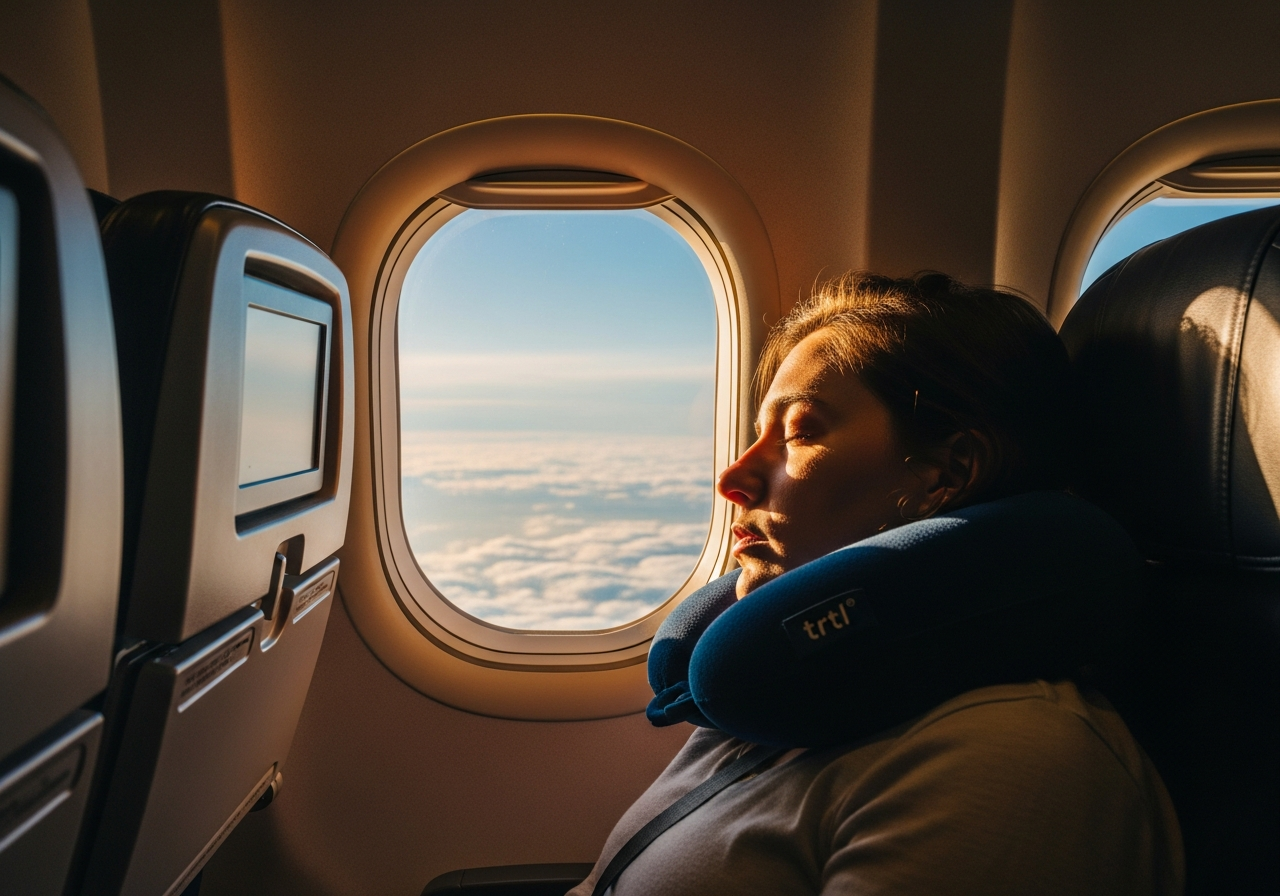
The eternal economy class struggle. Window seat gives you one crucial advantage: a wall to lean against.

Cabin pressure, dry air, engine drone, the conditions aren't on your side. Here's how to tip them back.

The right three bits of kit make more difference than the other six tricks combined. Start here.
You've got a 12-hour flight to Bangkok, 14 hours to Tokyo, or the long grind down to Sydney. You're in economy. You board with grand plans to sleep at least six hours and arrive fresh. You land looking like someone inflated a balloon animal and left it in the sun for three days.
Sound familiar? Long-haul sleep in economy is genuinely hard, and the people who claim they sleep brilliantly on planes either have a biological superpower or a business class upgrade they're not mentioning. That said, there are real, practical things that make a measurable difference. These are the nine we actually use.
The problem nobody wants to admit
The honest truth: your body is not designed to sleep upright at 35,000 feet. The cabin is pressurised to the equivalent of sitting at altitude, there's engine noise at exactly the wrong frequency, the lights keep changing, and the person next to you has decided this is the ideal moment to watch an action film without headphones. A baby finds its voice at hour three.
"The goal on long-haul isn't perfect sleep. It's arriving functional. Four hours of decent rest is a win, set yourself up for that." GO PAC team
Tricks 1-3: What you pack makes the biggest difference
Trick 1: Get a proper travel pillow. Not the sad foam horseshoe from the amenity kit. A genuinely good travel pillow is the highest-return item you can pack for long-haul. The Trtl Pillow is the one we keep coming back to. It wraps around your neck and holds your head in a supported position from the side, which is how most people actually sleep on planes. Lighter than a U-pillow, packs flat, hand-washable. It looks slightly odd, yes. So does sleeping with your mouth open at 35,000 feet.
The internal spine supports your neck from the side rather than underneath, much closer to how you actually sleep. Read our full review or buy on Amazon.
Trick 2: A proper blackout eye mask. The free airline eye masks are fine in the same way free biscuits on a train are fine, better than nothing but not much better. A contoured mask that sits away from your eyelids and creates a proper seal blocks the cabin lights, other passengers' screens, and the flight attendant's torch at hour eight. All of it adds up. Block it properly.
Trick 3: Earplugs or noise-cancelling headphones. This is a personal choice. Earplugs are cheap, light, and effective at killing engine drone. Noise-cancelling headphones are better at it but heavier and need charging. If you own a good pair, bring them. If not, proper foam earplugs (the 33dB reduction ones, not the tiny soft ones) do most of the job. Either way, having something specifically for blocking engine noise is not optional on long-haul.
Always weigh your bag at home before you leave, every airline's carry-on limit is different, and the gate scale is the worst place to find out yours is over.
Tricks 4-6: Your cabin environment matters more than you think
Trick 4: Seat selection is everything. Window seat. Pre-selected. A wall to lean against is a genuine sleep surface. You control the blind. You won't be woken every time someone needs to pass. For aircraft selection: check SeatGuru before you book, some window seats sit against the fuselage wall rather than a proper window, losing the leaning surface entirely.
✦ Seat selection tip, Check SeatGuru or the airline's own seat map before booking. Some window seats on certain aircraft are actually positioned against the fuselage wall rather than a proper window, which means you lose the leaning surface entirely. Two minutes of research, properly worth it.
Trick 5: Dress for the cabin, not the destination. Cabins get cold. Not slightly cool, actually cold, especially on night flights. Wear or pack a light layer you can pull on easily. Compression socks are worth it too, not as a fashion statement, but because they genuinely help circulation on long flights. Your legs will thank you at hour ten.
Trick 6: Control your light exposure deliberately. In the hours before your flight, think about what time it will be at your destination when you board. Trying to land and go straight to bed? Keep yourself in the dark during the flight. Trying to land and stay awake all day? Get some gentle light exposure during the journey. Your body's sleep signals are heavily driven by light, deliberately managing it is one of the more effective things you can do.
Tricks 7-9: Work with your body, not against it
Trick 7: Don't drink alcohol to help you sleep. This is the classic move and it genuinely doesn't work the way people think. Alcohol might help you nod off faster, but it wrecks sleep quality, dehydrates you in an already dehydrating cabin, and you'll wake up feeling considerably worse. Skip the wine with dinner if sleep is the priority.
Trick 8: The melatonin question. A lot of frequent long-haul travellers swear by it for resetting the body clock. It's not a sleeping tablet, it's a signal to your body that it's time to sleep, taken at the right moment relative to your destination's night time. It's prescription-only in the UK, so speak to your GP or a travel health clinic if you're interested. We mention it because it's a real tool in the long-haul toolkit, not a gimmick.
Trick 9: Have a pre-flight wind-down plan. The two hours before you board matter. If you spend them running through the airport, eating a heavy meal, and downing coffee, you'll board already wired. If your flight is overnight, treat it a bit like going to bed at home, eat something light, slow down, avoid screens where you can. Almost nobody does this, and it's one of the biggest free wins available.
How well does each trick actually work?
Pack one outfit you can re-wear: dark colours, quick-dry, no logos. It's your "things went sideways" backup and it weighs almost nothing.
What kind of long-haul traveller are you?
Find out which tricks matter most for your travel style
You're boarding a 13-hour flight tomorrow. Where are you sitting?
What's in your carry-on for sleeping?
On the flight, you order a drink. It's...
What actually doesn't help
A few things that get recommended a lot but don't move the needle in our experience:
✓ Worth the effort
- Proper travel pillow
- Contoured blackout eye mask
- Window seat, pre-selected
- 33dB foam earplugs
- Light layer for the cold cabin
- Skipping alcohol at dinner
- Boarding calm, not wired
✗ Overhyped, skip it
- Sleeping tablets (without medical advice)
- Reclining aggressively (you gain 2°)
- Inflatable mouth-support gadgets
- Full home sleep setup in carry-on
- Alcohol "to relax"
- Coffee just before boarding
Frequently asked questions
Melatonin is prescription-only in the UK, though it's available over the counter in the US and many European countries. Speak to your GP or a travel health clinic if you're interested. It works as a circadian signal, telling your body it's time to sleep, rather than as a sedative. It's a real tool, not a gimmick, but it's worth getting proper advice on timing.
Yes, for most people. You get a physical surface to lean against (the fuselage), you control the blind, and crucially, nobody needs to disturb you to get past. On a 12-hour flight that last point alone saves you two or three wake-ups. The one caveat: check SeatGuru before booking, as some "window" seats on specific aircraft sit against a solid wall rather than a window, which removes the leaning surface.
Some people use them, but the combination of deep sleep, limited movement, low cabin pressure, and dry air carries real risks. Most aviation doctors advise against them without specific medical guidance. If you're seriously considering them, talk to your GP first, particularly for very long flights where you're stationary for 14+ hours.
No, not in any meaningful way. Alcohol may speed up sleep onset slightly, but it fragments sleep quality significantly, dehydrates you further in an already dry cabin, and the rebound effect means you'll wake up feeling considerably worse than if you'd had a sparkling water. Save it for the return leg when arriving in a good state is less critical.
Window seat + neck pillow supporting from the side + reclined one notch. The side-lean against the fuselage wall is the closest you'll get to actually lying down. A pillow that supports your head from the side (like the Trtl) works better here than a traditional U-shape, which tends to push your head forward. A footrest that elevates your legs slightly also helps circulation and comfort on flights over 10 hours.
Our memory foam travel pillow covers the neck-support half of this, and every order ships free with a mystery GO PAC travel item tucked in. View the travel pillow →