









Osprey Farpoint 40 Review
Short version: it deserves the reputation. There are things we'd change, and we'll get to them. But for most travellers asking "what carry-on backpack should I buy," the Farpoint 40 (or Fairview 40, the women's-fit version) is the right answer and probably saves you weeks of further research. Buy the Farpoint 40 on Amazon UK (affiliate link), or the Fairview 40 women's version here.
The Osprey Farpoint 40 is the default recommendation for one-bag travel for a reason. It earns it.
The clamshell opening, the disappearing harness, and the lifetime warranty make this the carry-on backpack that most travellers should buy and never replace.
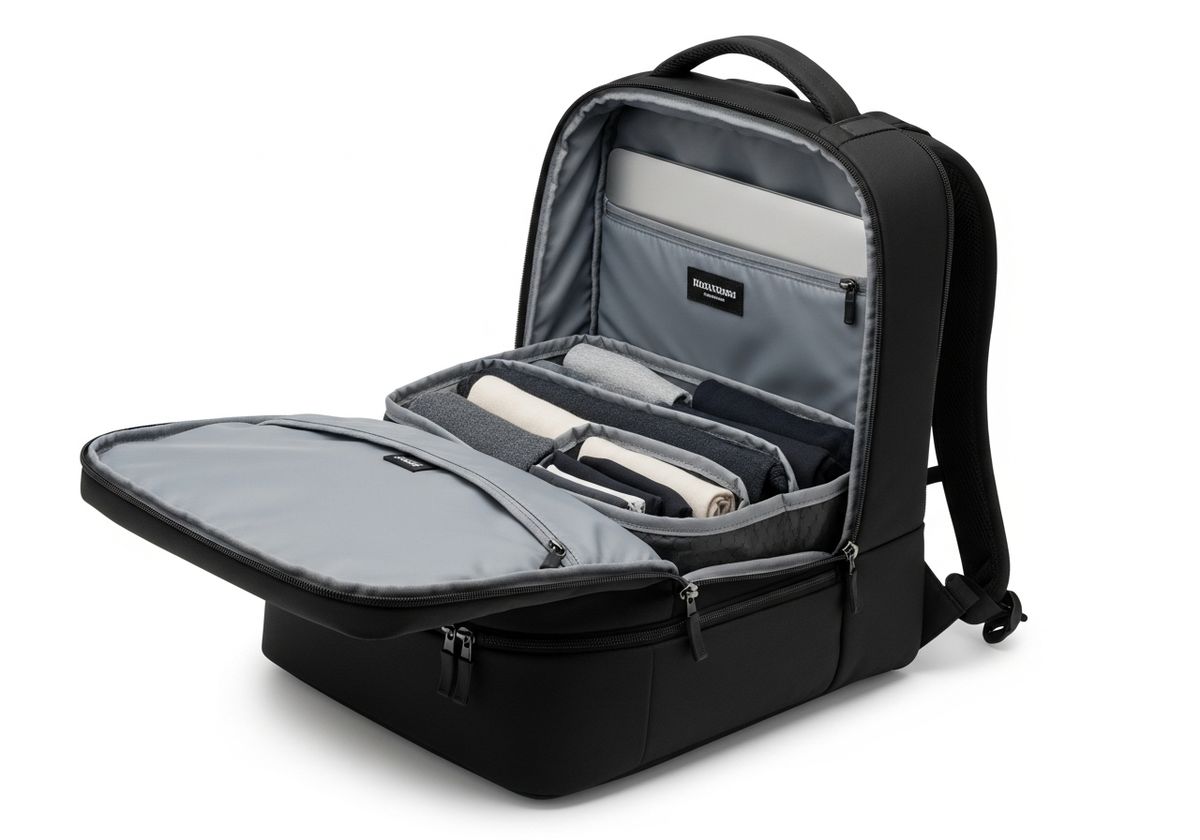
Forty litres, clamshell opening, lockable zips. The Farpoint 40 is designed for exactly this: packed, zipped, and ready to board.

The hip belt is what makes long urban carries tolerable. Without it, 12kg on your shoulders for 30 minutes is genuinely unpleasant.

Fits the Ryanair and easyJet sizer without drama.
If you've spent more than ten minutes researching travel backpacks online, you've heard about the Osprey Farpoint 40. It's the bag that gets recommended in every Reddit thread, every backpacker forum, every "one bag travel" YouTube video. Here's the honest verdict, based on what Osprey actually publishes about it and what buyers report once they've owned one.
At a glance
Capacity: 40 litres | Dims (S/M): 51 × 35 × 23 cm | Weight: 1.5kg | Opening: Clamshell | Hip belt: Padded, removable | Laptop: Up to 15" | Warranty: Lifetime | Price: ~£140 | Women's: Fairview 40
Always weigh your bag at home before you leave, every airline's carry-on limit is different, and the gate scale is the worst place to find out yours is over.
What it gets right
The clamshell opening is the killer feature. Most backpacks load from the top, which means digging through everything to find the thing at the bottom. The Farpoint zips around three sides like a suitcase, lays completely flat, and lets you see all your stuff at once. Packing cubes slot in like books on a shelf. This is the feature you only fully appreciate after you've used a top-loader for a week and lost your mind looking for socks.
The harness disappears when you don't need it. The padded hip belt, shoulder straps, and load lifters all tuck behind a zipped flap. This matters when checking it in at an airline desk (no dangling straps to get caught in conveyor belts) and when carrying it as a normal piece of holdall luggage. The transition between modes takes about ten seconds.
Comfort over long carries. Most "travel backpacks" treat the hip belt as a token gesture; Osprey treats it as an actual load-bearing component. Above about 8kg, a proper hip belt is the difference between walking and slowly dying.
It fits cabin baggage limits where most "carry-on" bags don't. The S/M size is within the 55 × 40 × 20 cm limits of nearly every major airline including the strictest budget carriers. (Note: the M/L size is slightly larger, go S/M unless torso length is a genuine issue.)
The lifetime guarantee is real. Osprey's All Mighty Guarantee replaces or repairs any bag for any reason, for life. This isn't marketing, it's a financial backstop that means a £140 bag will likely outlast multiple replacements of any cheaper alternative.
"The Farpoint 40 doesn't do anything revolutionary. It just does everything correctly." GO PAC kit review team
What's annoying
No bag is perfect. Here's where the Farpoint falls short.
No external water bottle pocket. This is a genuinely odd omission for a travel backpack in 2026. There's no stretchy mesh side pocket for a water bottle, no quick-grab spot for your phone. Anything you want to access mid-walk lives inside the bag. A separate small daypack or sling solves this, but it's a faff Osprey could have engineered out.
Organisation is minimal inside. The main compartment is one big space. There's a small zipped admin pocket near the top and the laptop sleeve, that's about it. Tortuga and Peak Design's equivalent bags have far more internal dividers. The trade-off is the Osprey is lighter and the clamshell is wider, if you use packing cubes the lack of internal dividers doesn't matter. If you prefer everything in dedicated slots, look elsewhere.
The fabric isn't waterproof. It's water-resistant, light rain rolls off, but in genuine rain it'll soak through within fifteen minutes. Osprey makes a rain cover for it (sold separately, around £25), which we'd recommend for wet destinations.
Osprey Farpoint 40 on Amazon UK → | Fairview 40 (women's fit) →
Rated by category
Pack one outfit you can re-wear: dark colours, quick-dry, no logos. It's your "things went sideways" backup and it weighs almost nothing.
Is the Farpoint 40 right for you?
Find out if this is the bag for your travel style
What does your typical trip look like?
How much do you walk with your bag?
How do you prefer to organise your packing?
Farpoint vs Fairview: which one?
The Farpoint and Fairview are the same bag with different harness shapes. The Fairview is built for shorter torso lengths and narrower shoulders, generally fits women's frames better, though it's not exclusively "women's". We'd recommend trying the Fairview if you're under about 5'7" regardless of gender, and the Farpoint if you're taller. Capacity and features are identical between the two.
Browse the Fairview 40 on Amazon UK (affiliate link).
Who it's actually for
✓ Farpoint 40 for travel
- Clamshell opening, pack like a suitcase
- Harness stows away completely
- Fits all major airline cabin sizers
- Padded hip belt for long urban carries
- Laptop sleeve easy at airport security
- Lifetime repair warranty, no questions
- Works as backpack and holdall
✗ Standard hiking rucksack for travel
- Top-loader only, dig to find anything
- Frame and straps exposed, catch on conveyors
- Often exceeds airline carry-on dimensions
- Hip belt built for trail use, not city walking
- Laptop buried at the bottom
- No travel-specific warranty coverage
- Awkward to carry as a holdall
Reusable beats single-use every time. A refillable bottle and a packable shopping bag pay for themselves on the first trip and save the planet a small amount of plastic.
What to look for in a travel backpack
The non-negotiables
Opening and access
Comfort
Airline compliance
Quality and longevity
Frequently asked questions
For most people, S/M is the right choice. It fits within the strictest airline cabin baggage dimensions (Ryanair, easyJet sizers), is lighter, and the torso length works for average adult heights. The M/L is designed for taller frames with longer torso measurements and is slightly larger overall, it can technically exceed the strictest carry-on sizers when fully packed. Osprey publishes a torso measurement guide on their website that helps you choose; measure from the top of your hip bones to the base of your neck.
The Fairview 40 is the same bag with a harness designed for shorter torso lengths and narrower shoulder widths, it generally fits women's frames better, though it's not labelled "women's only". Capacity, dimensions, clamshell opening, and all features are identical. If you're under about 5'7", we'd recommend trying the Fairview fit first. Both are on Amazon UK, the Fairview is here: Osprey Fairview 40 on Amazon (affiliate link).
Yes, the S/M fits within the Ryanair (40 × 20 × 25 cm personal item) and easyJet (56 × 45 × 25 cm) cabin bag limits without issue when sensibly packed. One caveat: if you've seriously overpacked, a fully stuffed 40L bag can become rigid enough to not compress into the sizer. Pack sensibly and you won't have a problem. The M/L is a closer call on the strictest sizers.
Remove the frame stay (the flexible rod in the back panel) before washing. Hand wash with mild detergent in lukewarm water, or put it on a gentle cycle in a front-loading washing machine inside a laundry bag. Do not put it in a tumble dryer, air dry only, and avoid direct sunlight for extended periods as UV degrades the fabric over time. The removable hip belt padding can be wiped down separately with a damp cloth.
If budget is the main constraint, the Osprey Farpoint 40 is already the most affordable in its class. Step up in price and the main alternatives are: Tortuga Travel Backpack (£240), more pockets, better for digital nomads; Peak Design Travel Backpack 45L (£300), expandable, premium materials, better as a daily bag too; Nomatic Travel Bag 40L (£260), modular features, lots of pockets, heavier. All three cost significantly more than the Farpoint for incremental improvements. If pure travel use is the goal, the Farpoint wins on value almost every time.
Buy the Osprey Farpoint 40 on Amazon UK → (affiliate link)
Or the Fairview 40 (women's fit) → (affiliate link)
Ready to get the Osprey Farpoint 40?
The default recommendation for one-bag travel for a reason. Lifetime warranty, airline-friendly, built for carry-on only trips.
Affiliate link, we earn a small commission at no extra cost to you