









Winter long-haul flight tips: from a cold UK departure to winter sun
Amazon links use our gopacuk-21 affiliate tag, and some links go to GO PAC's own shop. We may earn from purchases. It does not change what we recommend.
Dress in layers with your summer clothes underneath, sort your coat before you leave home, and keep sun kit in your hand luggage.
Wear a T-shirt base, a warm mid layer for the cold cabin and either a packable jacket or a coat you can leave in the car or at airport left luggage. Drink water and move every hour or so, as the NHS advises. If snow delays you, your airline still owes you care, even though weather usually rules out compensation. For in-flight sleep, see how to sleep on a long-haul flight.

De-icing happens close to departure, so keep a layer and water to hand.

The coat question: wear it, swap it or leave it behind.

Ten hours later: sandals and suncream should be in the carry-on.
Leaving the UK for winter sun means packing for two climates at once. You leave home in a frosty morning, sit for ten hours or more in a cool, dry cabin, then step out somewhere hot and humid. This guide covers the gap: what to wear, what to do with your coat, how to cope with cabin air and time zones, and what happens if snow or ice holds your flight at the UK end.
If your main worry is getting some sleep on board, our guide to sleeping on a long-haul flight covers pillows, seats and light. This one is about the winter-to-sun switch.
Dress for both ends of the trip
The simplest answer to "what should I wear on a long-haul flight to a hot country in winter?" is layers you can remove one at a time, with your summer outfit as the base layer.
- Base: a breathable T-shirt and light trousers or loose joggers you would happily wear on arrival. The NHS advises loose clothing on long journeys to help lower DVT risk.
- Middle: a jumper, fleece or zip-up hoodie. This is the layer you will want in the cabin, which can feel cold on night flights.
- Outer: your coat, for the walk from the car or the train to the terminal. See the next section for what to do with it.
- Feet: socks and slip-on trainers rather than boots. Slip-ons make security and the aisle easier.
Put a pair of sandals and a change of top in your hand luggage. If your checked bag is slow off the belt, or misses a connection, you are not stuck in jeans and a jumper in the heat.
What to do with your winter coat
A heavy coat is useless for a fortnight in Phuket or Barbados, but you will need it again the moment you land back in the UK. You have three practical options.
- Leave it behind. If someone drops you at the airport, or you park on site, leave the coat in the car.
- Swap it for a packable jacket. A lightweight down or synthetic jacket that squashes into its own pocket does the job of the coat for the walk to the terminal, then doubles as a cabin layer or pillow. Compare a packable down jacket.
- Store it at the airport. Heathrow and Gatwick both offer left luggage run by the Excess Baggage Company. Gatwick's counters sit before security in both terminals, open 04:00 to 22:00. Both airports list prices per item, starting at £15 for up to 24 hours and dropping to £10 a day after seven days, so work out the total for your trip before you hand it over.
Cabin air: cold, dry and at altitude
According to the CDC, aircraft cabin air is typically dry, usually 10 to 20% humidity, and cabins are pressurised to the equivalent of roughly 6,000 to 8,000 feet. Dry air can dry out your eyes and the upper airway.
- Drink water regularly. The NHS jet lag guidance says to drink plenty of water and limit caffeine and alcohol, which can make jet lag worse. The CDC adds that both can cause dehydration.
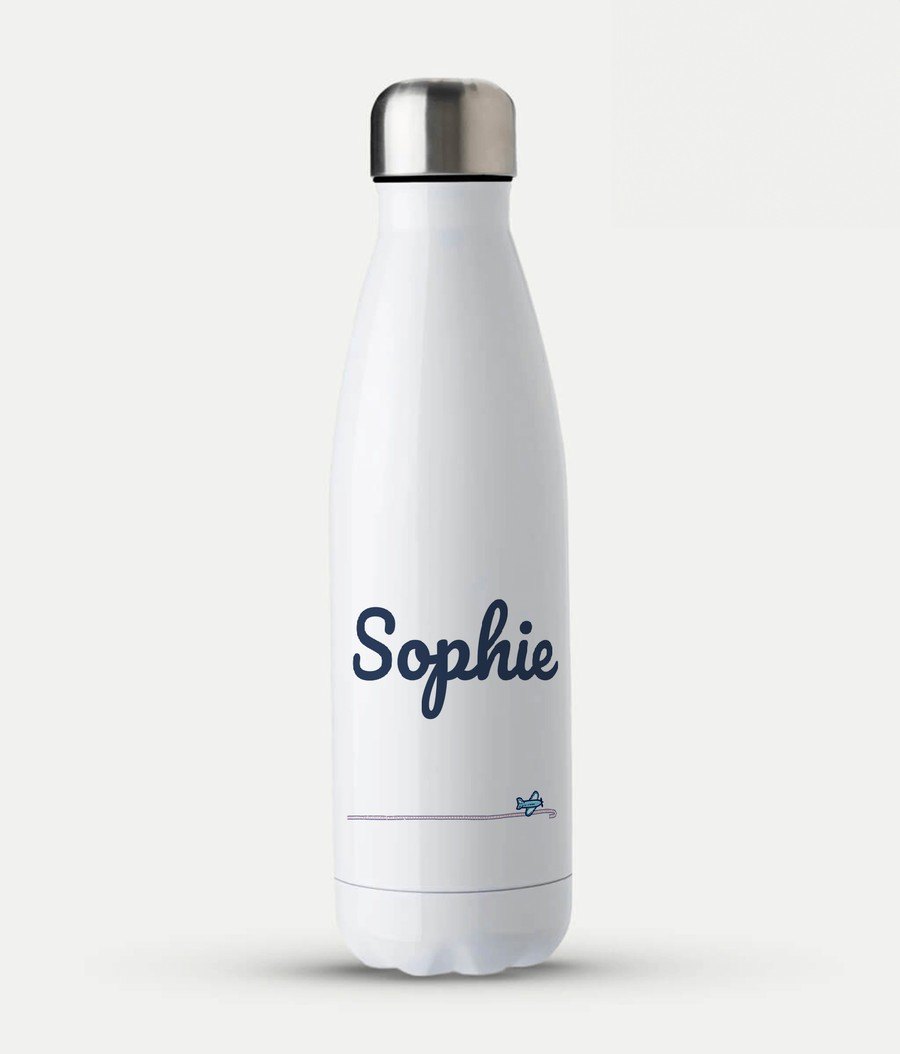
- Take an empty bottle. Empty bottles go through security, so you can fill up airside and ask crew for refills on board. Our personalised name water bottle is a 500ml steel bottle with your name on it. Any reusable bottle works.
- Pack lip balm and a small moisturiser in your liquids allowance, and glasses as a backup if your contact lenses start to feel dry.
Keep moving on a long flight
The NHS lists long journeys of more than four hours by plane, car or train as a time when you have a higher chance of deep vein thrombosis (DVT). Its advice for journeys of four hours or more:
- get up and move around every hour or so
- drink plenty of water
- avoid alcohol
- wear loose clothing
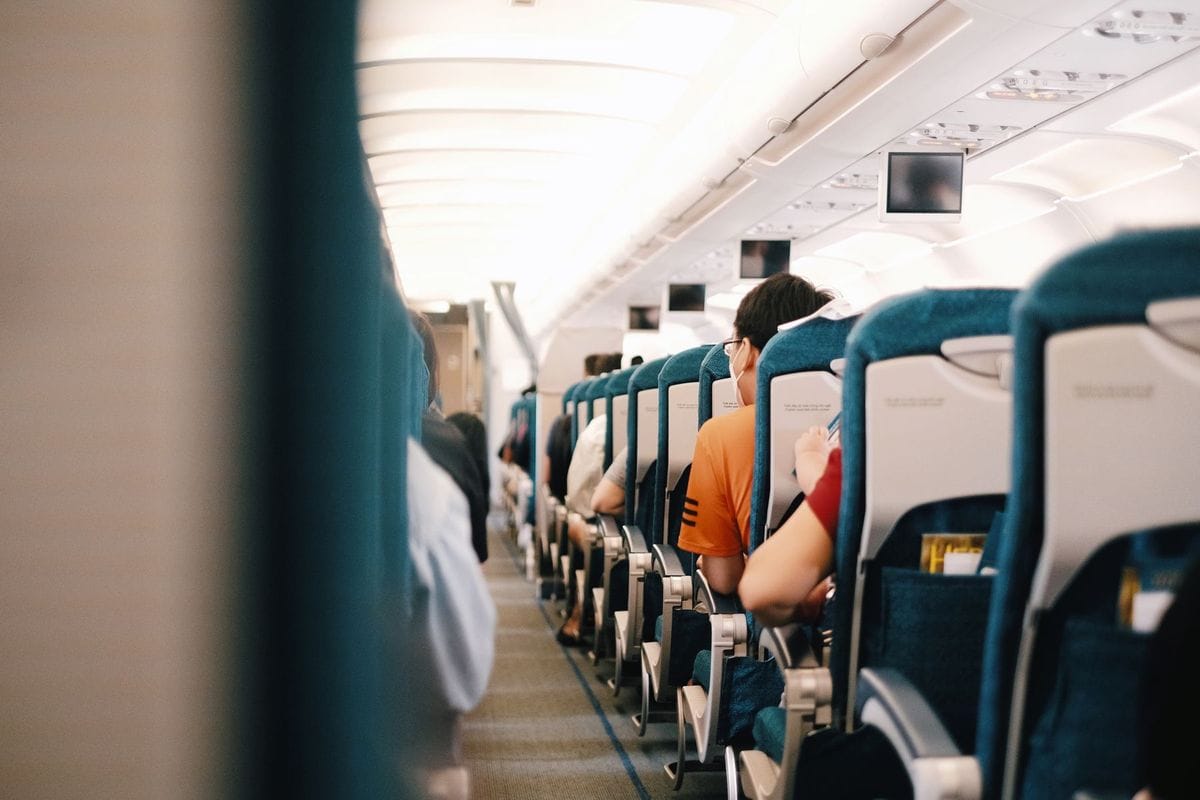
An aisle seat makes the hourly walk easier. The NHS DVT page does not cover flight or compression socks for travellers, so if you are thinking about compression socks, ask a pharmacist or your GP whether they suit you, particularly if you have had a clot before.
The CDC says travellers with a history of DVT or pulmonary embolism should be assessed before travel.
Jet lag: east is harder than west
Where your sun is matters. Dubai, Thailand, Bali and Australia are ahead of the UK, so you are flying east. The Caribbean, Mexico and Florida are behind, so you are flying west.
The CDC Yellow Book puts the average rate of adjustment at about 1.5 hours a day after flying west and 1 hour a day after flying east. The reason it gives is that the body clock naturally runs slightly longer than 24 hours, so staying up later comes more easily than going to bed earlier.
- Before you go: the NHS suggests resting well and shifting your bedtime and waking time towards the destination time zone in the days before you fly.
- On board: try to sleep if it is night at your destination. An eye mask and earplugs can help, and a memory foam travel pillow gives your neck somewhere to rest. Our travel pillow guide compares five.
- After flying east: the CDC suggests getting daylight at your destination time. Morning light helps, and avoiding bright light in the evening helps your clock shift forward.
The NHS says jet lag usually improves within a few days.
Snow, ice and de-icing delays at UK airports
In freezing weather, aircraft have to be cleared of frost, ice and snow before take-off. De-icing happens close to departure, often after boarding, so it can add time at the stand or in a queue for the de-icing rig. Keep your mid layer and water to hand rather than in the overhead locker until you are airborne.
If the delay grows, UK261 rules apply to every flight departing a UK airport, whatever the airline, according to the CAA's coverage table. The CAA's delay guidance for flights over 3,500km, which covers most winter sun routes, says:
- Care: after a delay of at least four hours, your airline must provide food and drink, a way to make two calls or emails, and accommodation if you are delayed overnight. The CAA says you should receive this regardless of the reason for the delay.
- Compensation: £260 per person if you arrive three to four hours late, or £520 if you arrive more than four hours late.
- Refund: if your flight is delayed by at least five hours, you can choose not to travel and get a refund.
The catch for winter is that airlines do not have to pay compensation for "extraordinary circumstances", and the CAA lists weather conditions incompatible with the safe operation of the flight as one of them. Care still applies. If the airline cannot provide it, the CAA says to keep itemised receipts so you can claim your expenses back.
The CAA says self-transfer journeys (separately booked flights) carry no statutory right to care, compensation or onward travel as one journey. In winter, a single ticket is the safer booking.
Pack your hand luggage for the heat
Your checked bag may not reach the hotel as fast as you do, so keep the essentials for the first afternoon in the sun within reach: swimwear, sunglasses, a hat, sandals and suncream. Our guide to packing a carry-on covers how to fit it in.
Liquids need care. GOV.UK says the rules for liquids now depend on the airport. At most airports you still cannot take liquids in containers larger than 100ml through security, and if your airport requires a bag, it must be a single clear resealable bag of no more than a litre, about 20cm by 20cm. Some UK airports with newer scanners allow containers of up to 2 litres. Check your departure airport, any connecting airport and your return airport before you pack, because the airport you fly home from may still apply the 100ml rule.
- Decant suncream into 100ml travel bottles for the hand luggage and put the full-size bottle in the hold.
- Keep a clear 1 litre liquids bag in your bag even if your departure airport does not need it, for the flight home.
- Essential medicines, special dietary items and baby food can go through in containers up to 2 litres at all UK airports, according to GOV.UK.
Sun protection on arrival
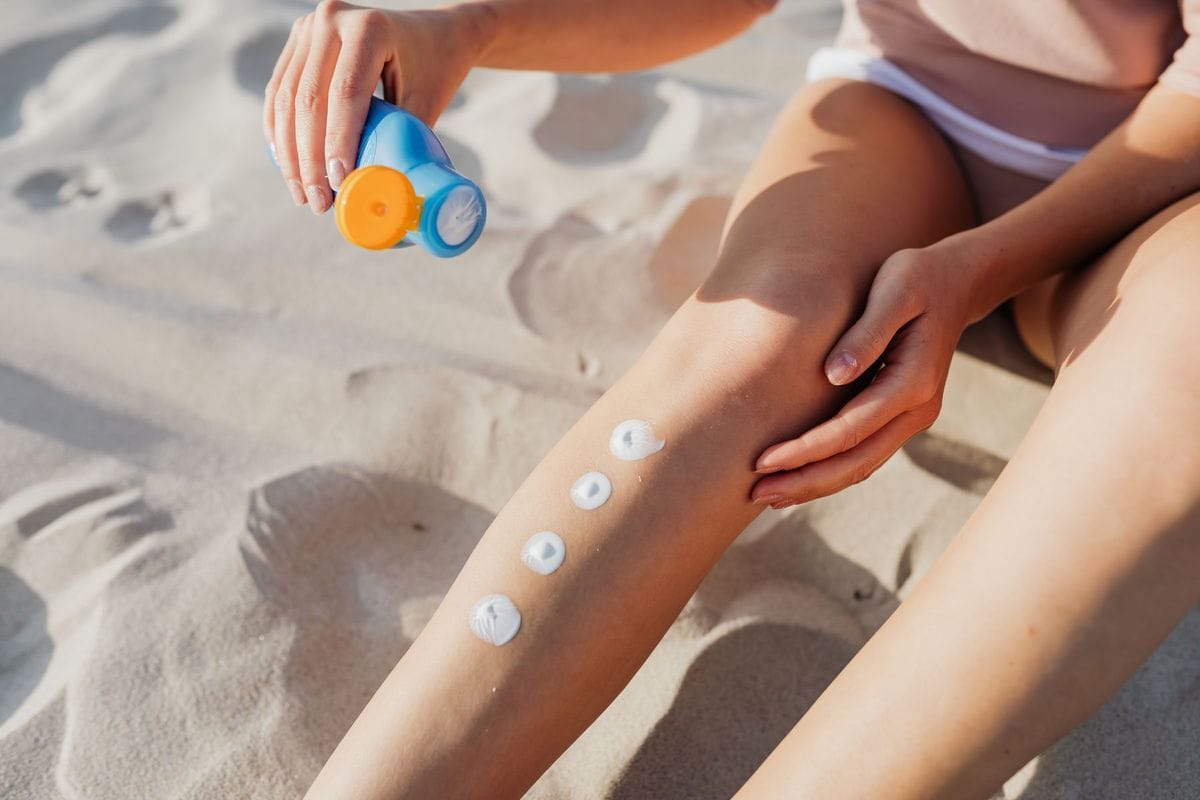
After a UK winter, skin has had little sun for months. The NHS advises a sunscreen of at least SPF 30 with at least 4-star UVA protection, applied generously: around 6 to 8 teaspoons to cover an adult's whole body. Apply it 30 minutes before you go out and again just before, and reapply after swimming, towel drying or sweating.
- Plugs: socket types differ between winter sun destinations, so check yours before you go. A travel plug adapter saves a hunt in the hotel shop.
- Data: set up an eSIM before you leave so maps work at the airport. See our eSIM travel guide.
- Beach kit: our beach holiday essentials list covers the rest.
And if the trip is one to remember, our destination prints are there for when you get home to the cold.
FAQs
Wear layers you can take off one at a time: a T-shirt and light trousers as the base, a jumper or fleece for the cold cabin, and a coat or packable jacket for the trip to the airport. Slip-on shoes and loose clothing are more comfortable, and the NHS recommends loose clothing on long journeys.
Leave it in the car if someone drops you off or you park at the airport, swap it for a packable jacket, or use airport left luggage. Heathrow and Gatwick both have left luggage run by the Excess Baggage Company, charged per item per day, so check the total for your trip.
Usually not. The CAA lists weather conditions incompatible with the safe operation of the flight as an extraordinary circumstance, so compensation does not apply. Your airline must still provide care, such as food, drink and overnight accommodation, regardless of the reason for the delay.
East. The CDC Yellow Book gives an average adjustment rate of about 1 hour a day after flying east and 1.5 hours a day after flying west. Thailand, Dubai and Australia are east of the UK; the Caribbean is west.
Yes, within the liquid rules for your airport. Most UK airports still limit containers to 100ml, while some with newer scanners allow up to 2 litres. Check your departure, connecting and return airports before you pack.
- NHS: Deep vein thrombosis (DVT)
- NHS: Jet lag
- NHS: Sunscreen and sun safety
- CDC Yellow Book: Air travel
- CDC Yellow Book: Jet lag disorder
- UK Civil Aviation Authority: Delays
- UK Civil Aviation Authority: Am I entitled to compensation?
- UK Civil Aviation Authority: Does UK law apply to your flight? (UK261 annex)
- GOV.UK: Hand luggage restrictions, liquids
- Heathrow: Left luggage
- Gatwick: Luggage storage